————————————————————————————————–
Minnesota Citizens Are Petitioning Their Way to Freedom
- MN Citizens Petition Their Way to Freedom (PDF) – saveyourcities.com
- Minnesota Beginning to Use International Taxing System on Property – MN PROPERTY TAX FRAUD
📞 Contacts: Rick – 763-248-5252 | Greg – 320-632-3969
_____________________________________________________________________________
1️⃣ Tools for Citizens
Common Law is not a theory — it’s the foundation of true self-government.
These tools are designed to help ordinary citizens understand, apply, and restore Common Law principles in their towns, schools, and counties.
From creating local comprehensive plans to understanding your rights as jurors, constables, and parents, everything begins with informed citizens working together.
A) Most people only know Common Law as “old history,” but it’s alive today — it defines our rights, limits government, and secures due process.
This resource explains how Common Law shapes local authority, how it differs from corporate or statutory law, and why communities are returning to it as the basis for real freedom.
[Read: common law is much bigger than you thought →]
B) Create or Use an Existing Comprehensive Plan to Include “Common Law”
Every town already has a “Comprehensive Plan” — a document guiding land use, zoning, education, and community development.
You have the right to update or rewrite this plan to align with Constitutional and Common Law values, ensuring that local decisions remain accountable to the people, not unelected agencies.
Use the templates below to start restoring self-governance where you live.
- Township Comprehensive plan
- Editable version: Edit Plan
C) Petitions, Ordinances, Resolutions & Proclamations
These sample documents give citizens and township boards ready-made legal language to assert local control, resist unlawful mandates, and pass resolutions consistent with Constitutional law.
They’re already formatted for Minnesota communities and can be adapted for your own township or county.
D) Why Are You Afraid of Citizen Militias?
The term “militia” has been distorted by media and politics, but under the Constitution, it simply means the people — able-bodied citizens trained and prepared to defend their rights and communities lawfully.
This article explains the true historical and legal meaning of the militia, how it relates to local safety, and why it remains essential to the balance of power in a free republic.
Together, these resources form a blueprint for reclaiming local sovereignty through peaceful, lawful, and informed action.
2️⃣ Townships
Restoring Local Control Starts Here
If freedom is to mean anything, it must begin at the local level — in our townships and small municipalities.
This is where citizens can most easily take back authority, ensure accountability, and restore Constitutional principles in local government.
Common Law recognizes that the township is the foundation of lawful self-governance. When citizens, boards, and law officers operate under the Constitution rather than international or corporate frameworks, the community thrives under freedom rather than control.
These resources provide a practical roadmap for rebuilding local authority, one township at a time.
OUR PLAN :
A) CONSIDER CONSTABLES NOW!
(AS CONSTITUTIONAL AS THIS IS, MN HAS OUTLAWED IT. FOR NOW OUR BEST SOLUTION SEEMS TO BE “CITIZEN PETITIONS” TO OVERTURN UNCONSTITUITIONAL MN LAWS)
The office of the Constable is one of America’s oldest and most vital local roles — a peace officer chosen by and accountable to the people, not to outside agencies.
Minnesota law still recognizes Constables, though the position is often dormant or forgotten.
Reviving this office ensures that local enforcement serves citizens first, under the Constitution and Common Law.
This guide explains how Constables protect community rights, assist in lawful process, and work with township boards to uphold order without surrendering authority to external bureaucracies. CONSTABLES IN MN WE NEED YOU NOW
B) Use this model proclamation to affirm your township’s commitment to protecting children, families, and community sovereignty.
It’s written in clear, lawful language and can be presented at any township meeting or included in official minutes. TWP PROCLAMATION DRAFT
C) Change happens step-by-step. This guide outlines the initial process to re-establish Common Law in your township — from forming citizen committees to notifying local boards and updating ordinances. STEPS TO COMMON LAW IN YOUR TOWNSHIP
D) REQUIRED READING FOR TOWNSHIP PROCESS :
The following foundational texts explain the origins and authority of Common Law, the rights of the people, and the duties of local officers.
- Louisiana Purchase Treaty BW 11 pg
- The Grand Jury belongs to the People, Antonin Scalia, 1992:
- GRAND JURY RULES – RULES
- History of the Constable BW 2 pg
“Freedom is preserved when citizens govern themselves at the smallest level — one township at a time.”
3️⃣ For Counties
Restoring Accountability in County Government
County-level government has enormous influence over budgets, land use, taxation, and law enforcement — yet too often, these offices operate without transparency or public oversight.
When elected officials fail to uphold the Constitution or the will of the people, it is both the right and responsibility of citizens to hold them accountable — or replace them through lawful, peaceful means.
This section provides ready-to-use petition tools and templates that empower citizens to correct course within their counties. Whether you’re addressing misuse of funds, neglect of duty, or unconstitutional policy, these documents help you take lawful action while maintaining integrity and due process.
Accountability Through Petition
The petition process is a foundational right under both the U.S. and Minnesota Constitutions.
When properly executed, it creates a permanent record of public will — compelling elected officials to act or face replacement through legal channels.
Each of the petitions below can be customized to your specific county or situation, ensuring that every citizen’s voice carries lawful weight.
Download and Use These Tools
A) PETITION COVER SHEET: The official cover page for citizen-led petitions and resolutions.
B) FORMAL PETITION : A fully structured template that can be adapted for recall, replacement, or reform actions.
C) EXAMPLE FOR CITIZENS TO USE : A completed sample showing recommended formatting and language for community use.
“Accountability is not confrontation — it is citizenship.
When the people hold leaders to the law, liberty grows stronger.”
📚 Learn More About Common Law
Understanding the Law of the Land — Not of Man
Knowledge is power — and nowhere is that truer than in the fight to restore our Constitutional Republic.
Common Law represents the timeless foundation of justice: a system built on moral truth, individual rights, and equality before the law.
These resources explain how Common Law works, why it was nearly lost, and how citizens can bring it back to their local communities.
Key Resources and Documents
Justice Scalia’s Words from the 1992 Ruling
In a landmark statement, Supreme Court Justice Antonin Scalia reaffirmed that the Grand Jury belongs to the people, not to the courts or the government.
This ruling remains one of the most powerful legal recognition’s of citizen authority under Common Law.
➡️ PEOPLES GRAND JURY
Do You Have a Shield for Your Home and Community?
A look at how individuals and families can protect themselves and their property lawfully under Common Law principles.
This piece outlines how a “shield” represents both legal protection and moral responsibility.
➡️ COMMUNITY SHIELD
The Way to Save Our Republic
A plainspoken explanation of how returning to Common Law governance can restore balance and integrity in America — one county and one citizen at a time.
➡️ SAVE OUR REPUBLIC
Why Common Law?
For those new to the concept, this article explains the difference between Common Law and statutory law, how the two interact, and why restoring the former is key to genuine liberty.
➡️ WHY DO WE NEED COMMON LAW NOW
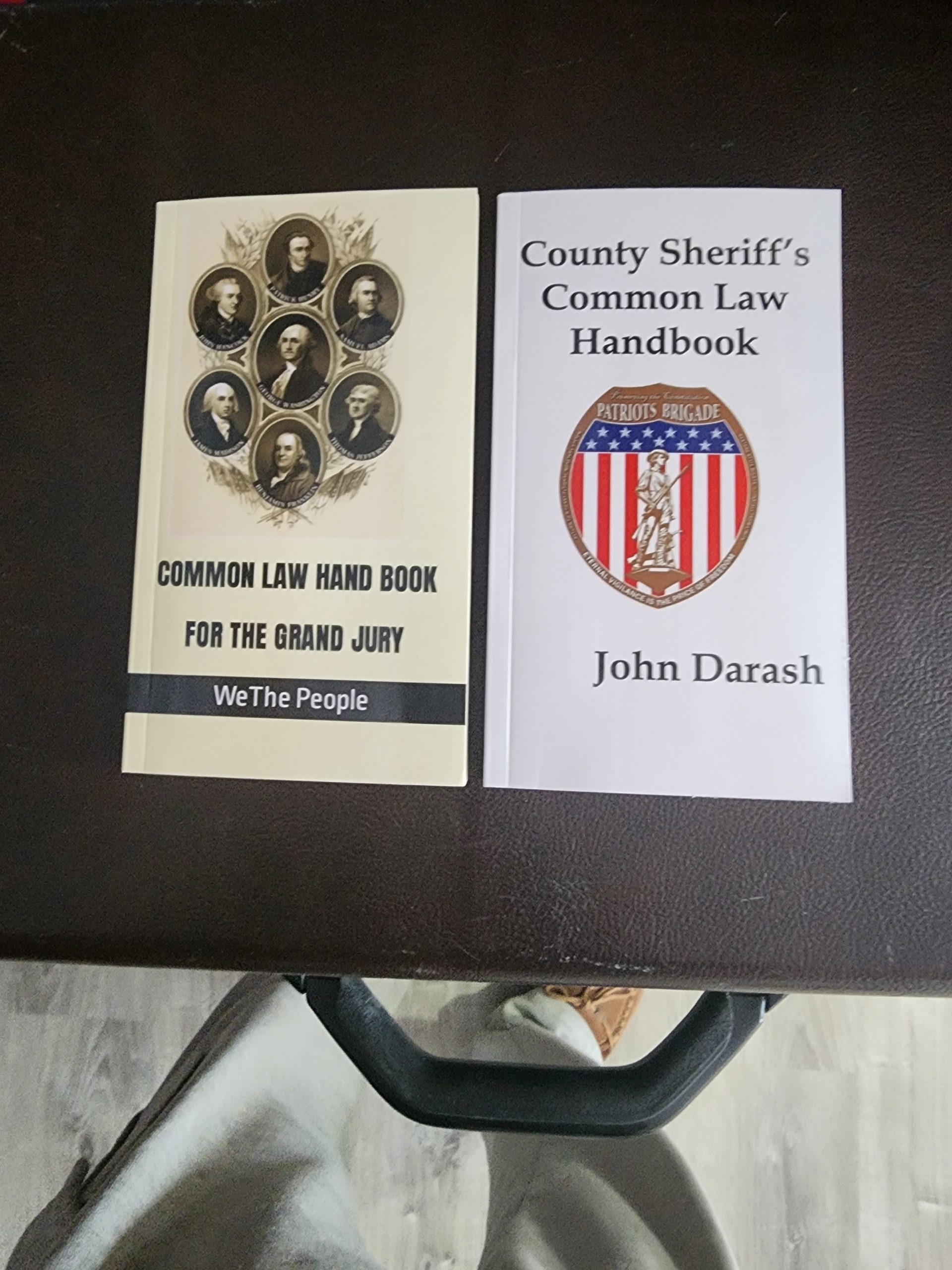
Common Law Handbook for Jurors, Sheriffs, Bailiffs, and Justices
A must-read for anyone wishing to understand how Common Law applies in real situations — from courtrooms to community service.
This handbook breaks down rights, duties, and procedures that define a free and moral society.
📘 Available from Amazon: “Common Law Handbook for Sheriffs and Grand Juries” COMMON LAW HANDBOOK
“When the people understand the law, they no longer live in fear of it — they stand upon it.”
Foundational Books & Texts
Common Law Handbook for Sheriffs and Grand Juries (Book)
A practical, plain-English guide to how Common Law functions in real life—jury authority, due process, and the duties of local officers (sheriffs, bailiffs, justices). Great for study groups and township leaders.
➡️ Available on Amazon: COMMON LAW HANDBOOK
We the People — Preamble (Full Explanation)
A clear walk-through of each phrase of the Preamble and how it secures popular sovereignty, justice, domestic tranquility, and the blessings of liberty. Use it to teach students, boards, and community groups why the Constitution begins with the people.
➡️ Read: WE THE PEOPLE
“When citizens understand the Preamble, they understand their authority.”
More Valuable Links
Deep Resources for Understanding Common Law and Citizen Authority
The following documents, rulings, and presentations expand on the legal, historical, and moral framework behind the modern return to Common Law governance.
Each link offers evidence, instruction, or inspiration for citizens working to restore local and constitutional authority.
Louisiana Purchase (1803)
The original U.S. treaty establishing sovereignty over vast territories also extended Constitutional Grand Jury rights to American citizens — a foundational precedent for local self-governance.
Scalia Court (1992)
In U.S. v. Williams, the Supreme Court under Justice Antonin Scalia reaffirmed that Citizen Grand Juries are independent of the courts and government, preserving their power to investigate and indict.
Minnesota Statutes: Constables and Justices of the Peace
State-level references confirming the continued lawful recognition of Constables and Justices of the Peace within Minnesota’s legal framework.
MN STATUTES CONSTABLES AND JPs
The Constable and Justice of the Peace Form (April 24)
A modernized document form supporting reinstatement or acknowledgment of these historic local offices.
THE-CONSTABLE-AND-JUSTICE-OF-THE-PEACE-DOC-FORM-APRIL-24TH
Common Law Citizen’s Grand Juries: We’ve Got the Power
An educational piece illustrating how organized citizens can form lawful Grand Juries under constitutional authority.
COMMON LAW CITIZENS GRAND JURIES
Citizens Have Unrealized Power at the Local Level – Save Your Cities
A reminder that local governance still belongs to the people — outlining specific powers communities can exercise today.
CITIZENS HAVE LITTLE KNOWN POWER AT THE LOCAL LEVEL
Common Law – Some Hope for Americans – Save Your Cities
A motivating essay on restoring confidence in lawful self-rule through faith, moral conviction, and constitutional practice.
COMMON LAW – SOME HOPE FOR AMERICIANS
Constitutional Law Part II: A Conversation with Ron Gibson – Land Patents (Bitchute)
A detailed discussion on land patents and how property ownership under Common Law differs from corporate or administrative systems.
Orville Moe: Constitutional and Energy Issues in the USA (Jan 2023)
A recent talk highlighting how constitutional principles can address modern challenges in energy policy and national sovereignty.